Remember payphones? Those crusty public rectangles your parents used to call for a ride before every human on earth got a rectangle in their pocket? Well, someone just dragged one back from the dead, covered it in moss, and plugged it into an AI. And somehow it works as a concept.
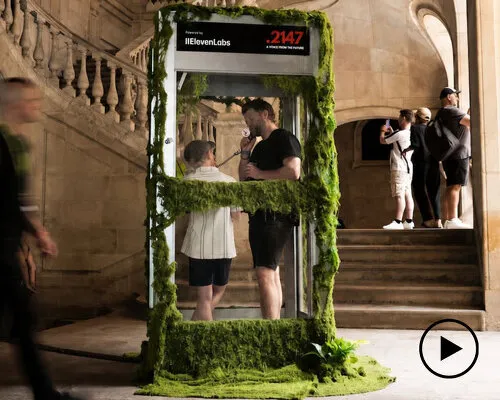
The project is called 2147, and it does exactly what the name implies - it positions itself as a communication channel from roughly 125 years into the future. The installation takes an original early-2000s Telefónica payphone, gives it a full mossy, overgrown makeover (very "nature reclaims civilisation" energy), and transforms it into a real-time AI-powered conversation interface. You pick up the receiver, and something speaks back.
Why a payphone, though?
Honestly? The payphone choice is doing a lot of heavy lifting here, and it's doing it brilliantly. There's something genuinely poetic about using a piece of communication technology that the smartphone effectively killed and resurrecting it as a vessel for one of the most cutting-edge technologies of our time. It's the circle of life, but make it telecom.
The moss aesthetic also isn't just decorative flair - it's a statement. The overgrown, organic exterior wrapping around the hard plastic and metal of a 20-year-old payphone quietly suggests a future where the boundary between the natural and the artificial has blurred considerably. Or it just looks very cool at a design festival. Both things can be true.
A voice from 2147
The project, reported by Designboom, was presented at Sónar+D, the Barcelona festival's creative technology arm - which is exactly the right audience for something this conceptually loaded. The AI interface enables real-time conversation, meaning this isn't a pre-recorded experience. The "voice from the future" actually responds to you, which is either deeply exciting or deeply unsettling depending on your relationship with AI chatbots.
What makes 2147 stand out from the sea of AI art installations flooding galleries right now is the specificity of its physical form. It's not a screen, not a speaker on a plinth, not a robot arm. It's a payphone - an object with massive cultural and emotional baggage. Picking up that receiver triggers a whole library of memory and association before a single word is spoken.
The bigger picture
At a moment when AI feels omnipresent but somehow weightless - living in apps and browser tabs and invisible cloud infrastructure - there's real value in giving it a body. Especially a body as loaded with nostalgia and obsolescence as a moss-covered public telephone.
2147 is asking a pretty smart question underneath all the aesthetic drama: what does it mean to call the future? And what does it say about us that the future might actually pick up?