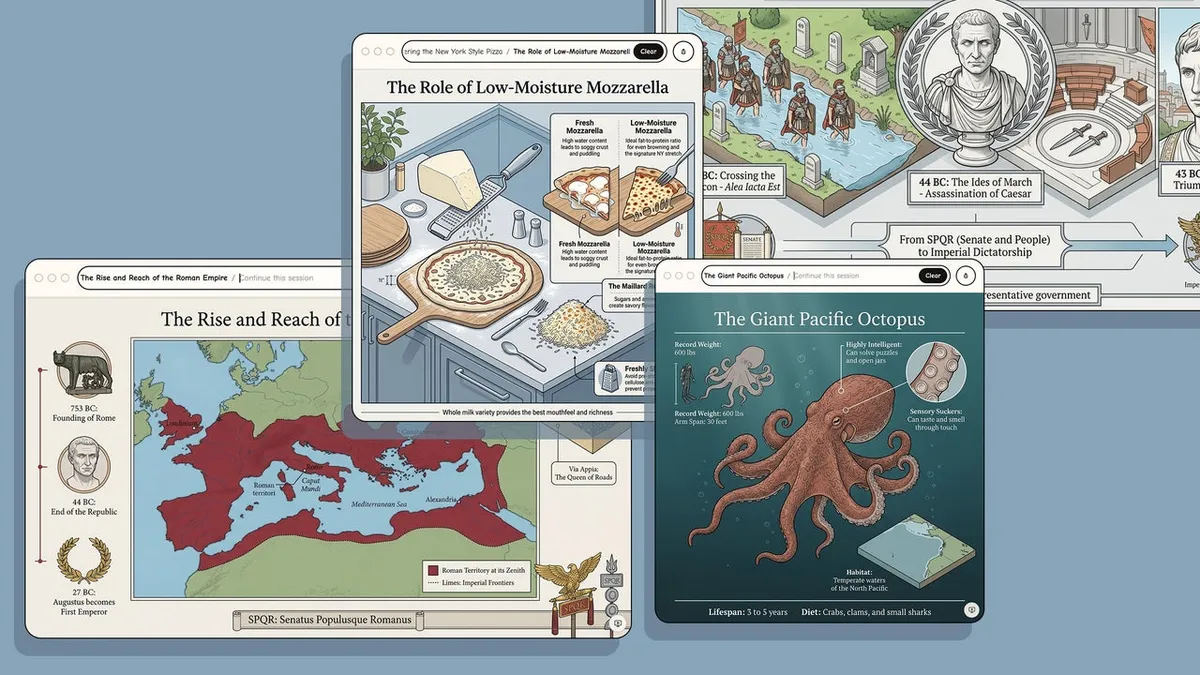
The internet used to feel like magic. Then it became a grid of white rectangles filled with prompts, disclaimers, and lists. But a new project called Flipbook is staging a quiet little rebellion against all of that, and honestly? It's about time.
As reported by Fast Company, Flipbook describes itself as an infinite visual browser generated on demand, in real time. Every page is an image. Every click opens a deeper visual exploration of whatever caught your attention. No prompt box. No wall of text. Just a living, breathing rabbit hole you fall into one picture at a time.
Wait, HyperCard is back?
Sort of. For the uninitiated, Apple's HyperCard was a late-80s software tool that let regular people build interactive, card-based multimedia experiences before the web even existed. It was weird and wonderful and absolutely ahead of its time. Then Apple killed it in 2004, and we all collectively forgot what non-rectangular computing could feel like.
Flipbook is clearly drinking from that same fountain. Instead of the now-standard AI experience of typing a question and receiving a depressing avalanche of bullet points, Flipbook pulls information from a large language model and serves it up visually, like flipping through a beautifully illustrated book that rearranges itself based on your curiosity.
Why this actually matters
Look, we've been promised the future of AI interfaces approximately 47 times in the last two years, and it's mostly just been the same chat box with a slightly different color scheme. Flipbook feels different because it's rethinking the metaphor entirely.
The browser has barely changed since the 90s. Tabs, URLs, back buttons. We've just accepted it. Meanwhile, the underlying technology has become science fiction. Flipbook is at least asking the question: what if browsing the web felt less like filing taxes and more like exploring?
It won't replace your Chrome window for booking flights or checking your bank balance. But as a way of discovering and exploring ideas? This is the kind of project that deserves to exist just to remind everyone that the defaults aren't laws of physics. Someone just decided rectangles were fine, and we all nodded along for 30 years.
HyperCard believers, your moment might finally be here.