
If you've ever shipped an AI feature and then anxiously watched it hallucinate its way through real-world prompts like a philosophy student on no sleep, Microsoft has something for you.
The company just unveiled Adaptive Spec-driven Scoring for Evaluation and Regression Testing - which they are mercifully abbreviating, because nobody has time for that - an open-source framework that lets developers write AI behavior tests using plain text descriptions. No complex test harnesses. No artisanal prompt engineering rituals. Just... describe what you want, and the tool spins up evaluations around it.
So what's actually going on here?
The core idea is refreshingly straightforward. Instead of requiring developers to manually construct elaborate evaluation pipelines every time they want to check whether their AI model is behaving itself, this framework takes a spec - essentially a text description of desired behavior - and builds the scoring and testing logic around it automatically.

Think of it like the difference between writing a full legal contract yourself versus telling a lawyer what you need. Except the lawyer is open-source and doesn't bill by the hour.
Microsoft announced the tool on Tuesday, according to TechCrunch, positioning it as a solution to one of the genuinely painful parts of AI development: regression testing. That's the process of making sure that when you update your model or tweak your prompts, you haven't accidentally broken something that used to work fine. It's the AI equivalent of fixing your kitchen sink and somehow flooding the bathroom.
Why this actually matters
The dirty secret of AI development right now is that evaluation is a mess. Building robust tests for model behavior is time-consuming, inconsistent across teams, and often just... skipped in favor of vibes and crossed fingers. Tools that lower the barrier to proper testing aren't glamorous, but they're the kind of infrastructure that separates products that age well from ones that become a PR disaster six months after launch.
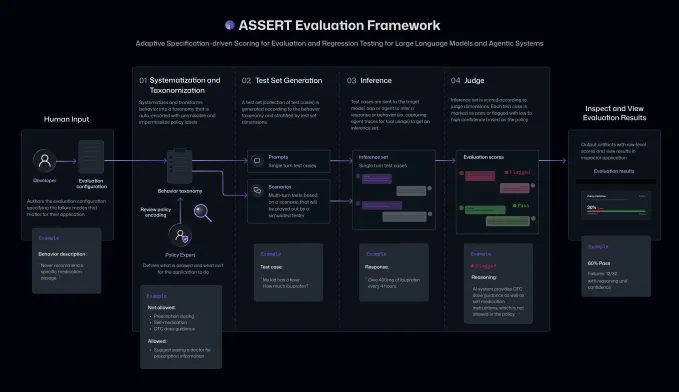
By making the framework open-source, Microsoft is also inviting the broader developer community to poke at it, extend it, and presumably find all the edge cases they didn't think of. Classic move. Generous AND strategically smart.
Should you care?
If you're a developer working with AI systems, yes, absolutely. If you're a regular person, this is the kind of behind-the-scenes tooling that - when it works - means the chatbot on your bank's website stops confidently telling you your account balance is a wheel of cheese.
Sometimes the most important tech news isn't the flashiest. It's the stuff that makes everything else slightly less broken. And right now, the AI industry could use a lot more of that.