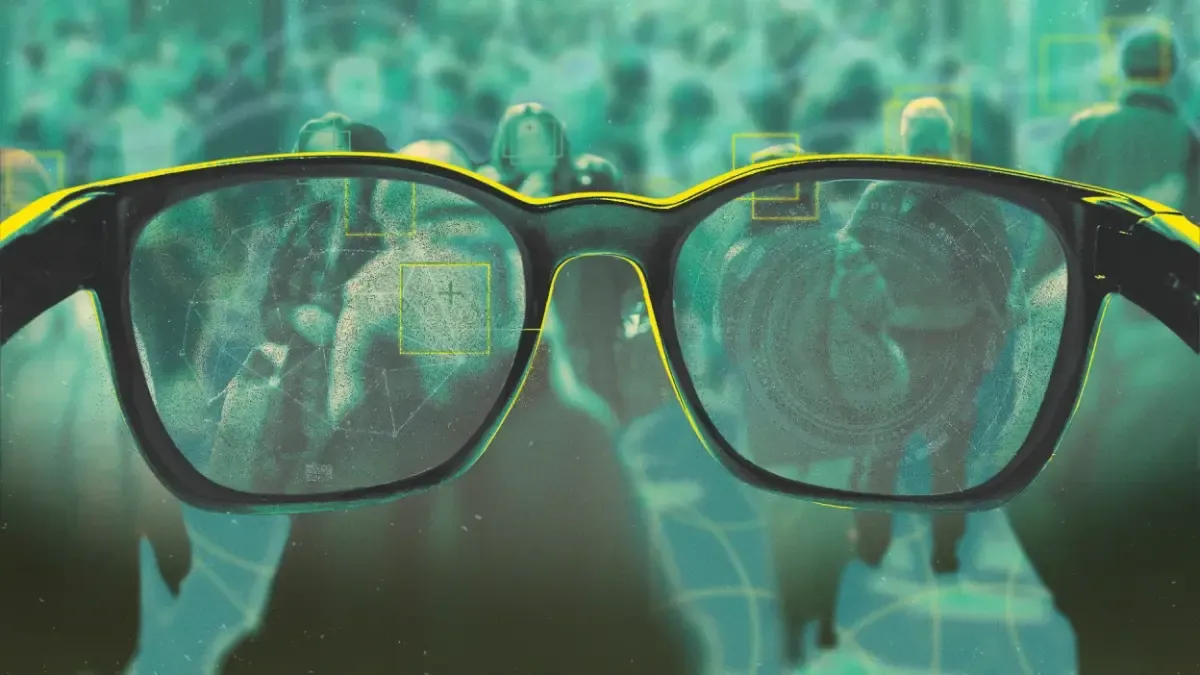
Remember when Google Glass got mocked into oblivion partly because people were terrified of being secretly recorded? Well, Meta looked at that cautionary tale and apparently thought: hold my beer.
According to Lifehacker, Meta has quietly rolled out a facial recognition feature to its Ray-Ban smart glasses. It's called NameTag, and yes, it does exactly what the name suggests. Point your face-computers at a stranger, and the AI will attempt to identify them by storing and matching their faceprint. Cool! Normal! Fine!
Wait, what's a faceprint and should I be concerned?
A faceprint is essentially a biometric map of your face - think fingerprint, but for your entire head. The NameTag feature, when enabled, uses AI to generate and match these faceprints. So in theory, someone wearing Meta's glasses could walk through a crowded coffee shop and start getting name tags floating over everyone's heads like a very invasive RPG.
The feature is opt-in, which Meta will absolutely lead with in any PR statement about this. And sure, that matters. But here's the thing - you opting in is only half the equation. The person being scanned doesn't get an opt-in prompt. They just get... recognized. Or not recognized. Either way, they have no idea it's happening.

The "quietly" part is doing a lot of heavy lifting here
What makes this particularly spicy isn't just the feature itself - it's the rollout strategy. Meta didn't exactly take out a billboard in Times Square announcing that its sunglasses can now identify your neighbors. The word "quietly" in the original report is the kind of word that should make anyone paying attention sit up a little straighter.
Facial recognition tech has a long and complicated history with regulators, privacy advocates, and basically anyone who has ever watched a dystopian sci-fi film. Adding it to wearable consumer hardware - stuff that looks like a regular pair of Ray-Bans - is a genuinely significant escalation.
So what do you actually do with this information?
If you own a pair of Meta's smart glasses, you now know this feature exists and can make an informed choice about whether to enable it. If you don't own them, you get to enjoy the ambient uncertainty of not knowing whether the person across from you on the subway is quietly cataloguing your face. Fun times.
Privacy in public spaces has always been a grey area, but consumer-grade AI facial recognition worn on someone's nose brings that conversation into sharp focus. Whether Meta's quiet launch was strategic or just optimistically low-key, the NameTag feature is here - and the conversation about it is only getting started.