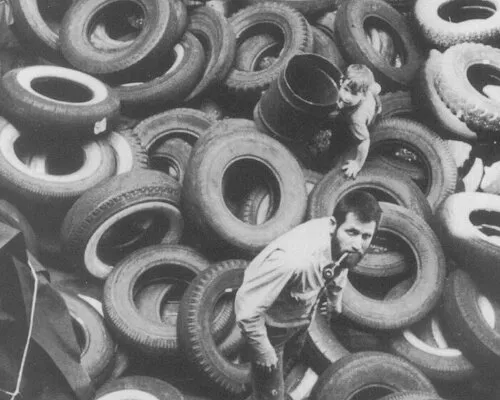
Before escape rooms, before pop-up installations, before brands started turning product launches into theatrical events - there was Allan Kaprow, blurring the line between art and everyday life in ways that still feel radical today.
Kaprow was the artist and theorist who coined the term "happening" in the late 1950s, describing loosely structured, participatory events that rejected the passive gallery experience entirely. No velvet ropes, no hushed reverence. Instead, audiences were invited - expected, really - to become part of the work itself. The space was the art. The people moving through it were the art.
Why this matters now
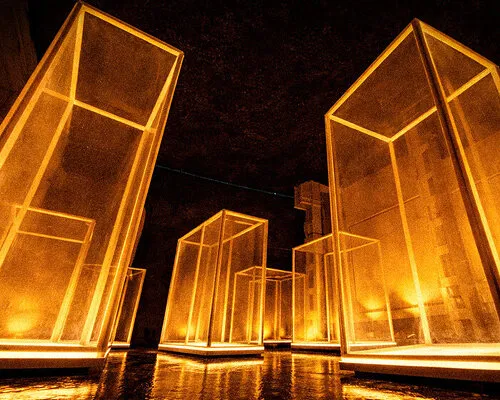
It would be easy to treat Kaprow as a historical footnote, a quirky chapter in the story of postwar avant-garde movements. But as designboom recently explored, his legacy runs directly through the immersive environments that dominate contemporary culture - from large-scale digital installations to the kind of sensory experiences that sell out within hours of tickets going live.
The throughline is participation. Kaprow understood something that took the broader culture decades to catch up with: people don't just want to observe beauty or meaning, they want to feel implicated in it. They want agency inside an experience. They want the story to include them.
From lofts to algorithms
What started in New York lofts and outdoor public spaces has evolved through each technological era. The logic of the happening - activated space, embodied engagement, the dissolution of audience and performer - translated naturally into digital environments where the boundaries between creator and user are similarly porous.
Today's immersive art world, with its room-scale projections and responsive environments, is essentially asking the same question Kaprow was asking in 1959: what happens when the frame disappears? When you can't stand outside something and simply look at it?
The participation problem
There's a tension worth sitting with here. Kaprow's happenings were deliberately open-ended, even uncomfortable. They resisted easy consumption. Much of what passes for immersive experience today is beautifully produced but fundamentally passive - a walk-through spectacle rather than genuine participation.
The best contemporary work navigates this carefully. The experiences that actually land, that people talk about long after leaving, tend to be the ones that demand something back. That create genuine uncertainty about what your role is.
Kaprow got there first. And understanding where immersive culture came from is a surprisingly useful lens for understanding where it's going - and why some of it feels genuinely alive while other versions feel like very expensive screensavers.