Look, we have all started an AI research session with grand ambitions, typed a few prompts, got some interesting answers, and then completely failed to save any of it in a useful way. Google seems to know this about us, and the latest NotebookLM update is basically an intervention.
So what actually changed?
According to TechCrunch, Google is making Gemini 2.5 the default model powering NotebookLM - which is already a meaningful upgrade on its own. But the more interesting part is the new ability to build out your source repository directly from your chat sessions.
Translation: the stuff you discover and discuss while chatting can now feed back into your notebook as organized source material. Your conversation stops being a throwaway interaction and starts becoming part of the actual knowledge base you are building. It is like taking notes, except you barely have to try.
Why this is a bigger deal than it sounds
NotebookLM has always had a clever angle - it keeps your AI interactions grounded in sources YOU provide, rather than letting the model just hallucinate confidently into the void. That is genuinely useful for researchers, students, journalists, or anyone who needs their AI tool to stay in its lane.
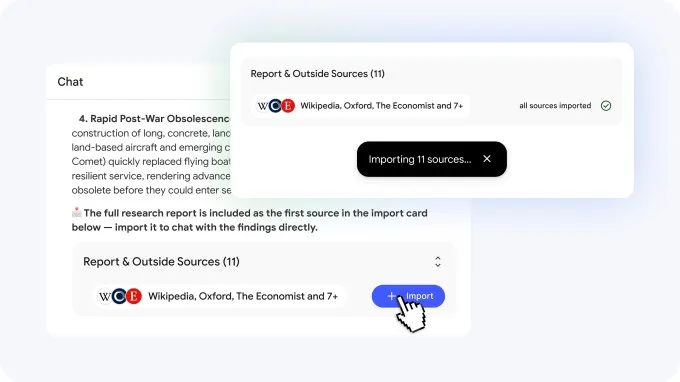
The problem was the workflow felt a little one-directional. You dump sources in, you ask questions, you get answers. Fine. But now that loop is closing. The chat itself becomes generative in a structural sense - not just producing text, but producing organized, referenceable material you can actually build on later.
Pair that with a Gemini 2.5 backbone and you are looking at a tool that is quietly becoming one of the more sensible AI research assistants out there. Less "wow look at this magic" and more "okay this is actually helping me do work."
The nerd verdict
If you have been sleeping on NotebookLM because it seemed niche or fiddly, this update is worth a second look. The Gemini 2.5 upgrade alone makes the outputs sharper, and the source-building-from-chat feature addresses one of the most genuinely annoying parts of AI-assisted research - the fact that useful context kept disappearing into the ether the moment your session ended.
It is not flashy. There is no image generation, no viral demo, no robot doing backflips. It is just a research tool getting meaningfully better at the thing it was already trying to do. In 2025, that kind of boring competence is honestly kind of refreshing.