Breaking a bone is bad enough. But then they slap a heavy, sweaty, intensely itchy plaster prison onto your arm for six weeks and tell you to have a nice day. Thanks, medicine. Very cool.
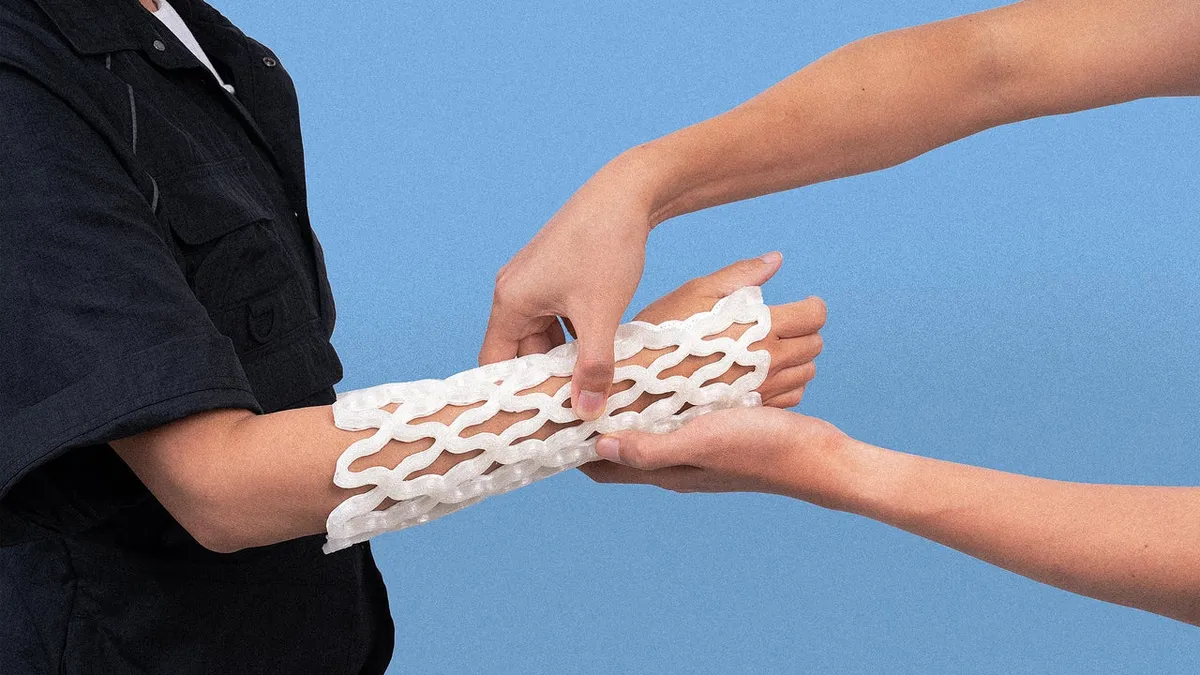
As Fast Company reports, a Singapore-based startup called Castomize is done with that nonsense. They've developed a 3D-printed cast that's open, breathable, and - hold on to your orthopedic socks - completely waterproof.
So what actually makes this different?
Traditional plaster casts are essentially the same technology your grandparents wore. They trap heat, they itch like you've got a family of fire ants living inside them, and showering becomes a whole production involving plastic bags and prayers.
Castomize's version is heated until it becomes soft and flexible, then shaped directly to the patient's arm. It molds to your specific anatomy, which means a more precise fit and - crucially - a more comfortable recovery. The open lattice design lets air circulate and means you can actually wash your arm like a normal human being.
Doctors apparently like it too
It's not just patients who benefit. The design is reportedly easier for medical teams to apply, which matters when you're dealing with a waiting room full of people who've had extremely bad days. The heat-and-shape application process sounds simpler than wrestling someone into a traditional wet plaster situation.
Right now, the casts are available at select hospitals and clinics across Singapore, so if you're not located there, you'll need to either move or be very careful on your skateboard for a bit longer.
Why this actually matters
Comfort during recovery isn't a luxury - it's a health issue. When patients are miserable, they're less likely to follow through properly with recovery protocols. A cast someone can live with for six weeks is genuinely better medicine than one they're hacking at with a ruler at 2am.
3D printing in healthcare has been promising "revolution" for years now, but Castomize looks like a case where the technology is solving a very real, very specific, very itchy problem. Sometimes that's all innovation needs to be.
No word yet on global expansion, but here's hoping the rest of the world's fracture patients get access sooner rather than later. Our future clumsy selves are counting on it.