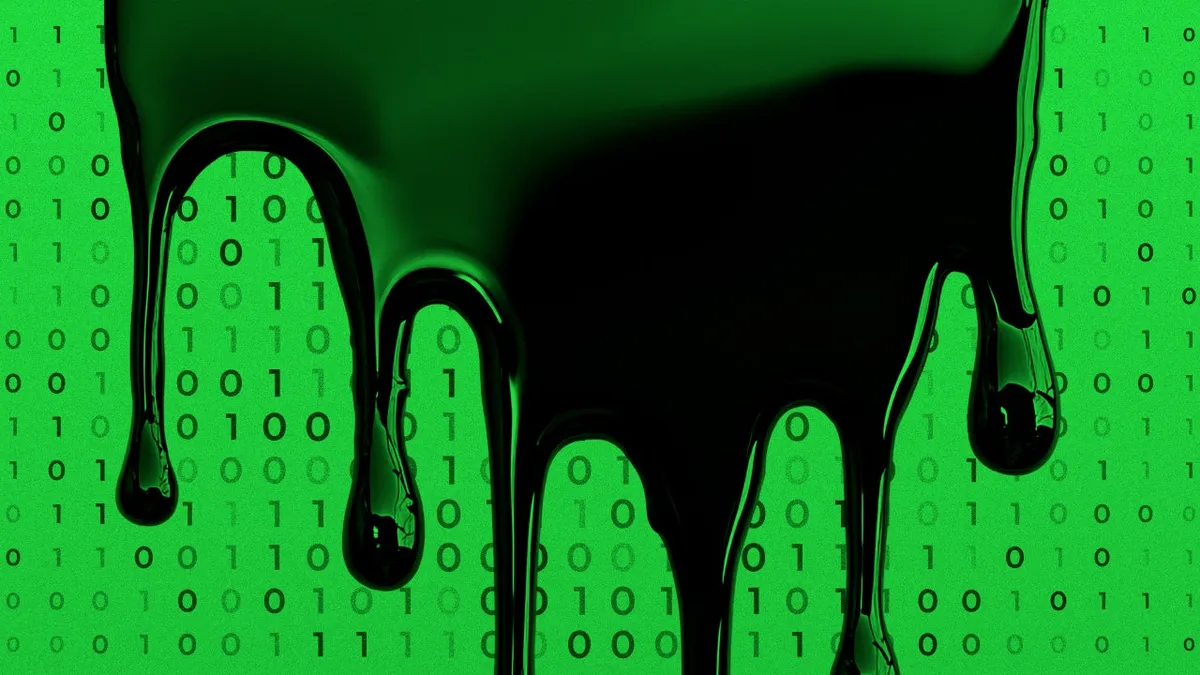
Imagine setting a trap where anyone who tries to steal from you gets so thoroughly confused they start hallucinating nonsense forever. That's basically what AI tarpits do, and honestly, it's the most satisfying tech drama of the year.
Here's the deal: AI companies need enormous amounts of data to train their large language models (LLMs). To get it, they send out automated bots that crawl the web and scrape content - often without asking permission from the people who actually created it. Blogs, articles, creative writing, code repositories - all fair game, apparently, if you're a billion-dollar AI lab with a loose interpretation of "fair use."
So what even is a tarpit?
According to reporting by Fast Company, a tarpit is essentially a digital honey trap designed to waste AI scrapers' time and poison their training data. When a bot wanders in looking for content to steal, it instead gets fed an endless maze of plausible-sounding but completely fabricated gibberish. The bot dutifully shovels all this garbage into the AI's training pipeline, and suddenly your chatbot is a little bit dumber and a lot more confused.
Think of it like the scene in every heist movie where the vault is full of decoy diamonds - except the diamonds are words, and the thief is a language model that will now confidently tell users completely wrong things.
Why does this actually matter?
This isn't just nerdy mischief. It represents a genuine, grassroots pushback from content creators and IP holders who are tired of watching their work get vacuumed up without consent, credit, or compensation. The AI industry has largely operated on the assumption that if something is publicly accessible online, it's fair game for training. A lot of writers, artists, and developers disagree - loudly.
Tarpits are one of the few tools that put some power back in creators' hands without requiring a lawsuit or a congressional hearing. They're low-tech, creative, and deeply petty in the best possible way.
The bigger picture
Of course, this is also an arms race. AI companies can theoretically improve their scrapers to detect and avoid tarpits. But every hour spent on that is an hour not spent on something else, and every piece of poisoned data that slips through degrades model quality in ways that are genuinely hard to trace.
For now, tarpits are less a permanent solution and more a very satisfying protest sign - one that also happens to make the thing it's protesting slightly worse at its job. In an era where creators feel largely powerless against AI's relentless appetite for content, that's not nothing.
It might even be everything.