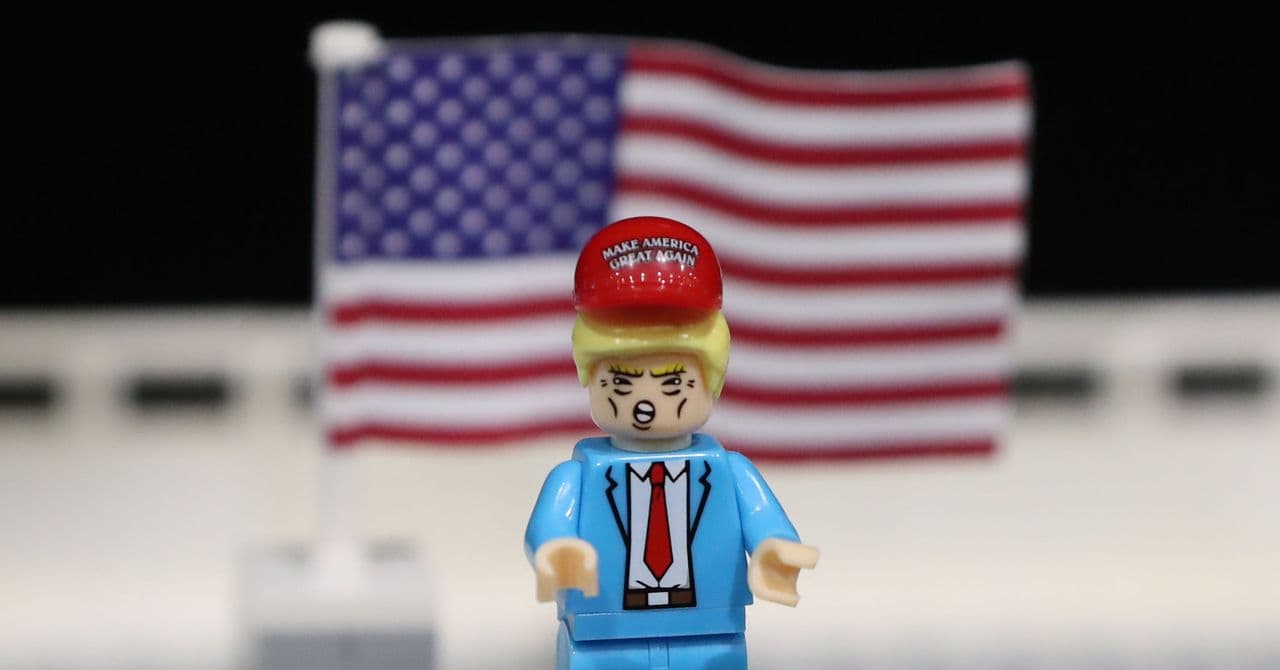
Forget grainy state TV broadcasts and wall-to-wall news chyrons. The latest front in the US-Iran information war looks more like a kids' YouTube channel than traditional geopolitical messaging - and that's very much the point.
Since the start of the Iran conflict, a group calling itself Explosive Media has been pumping out AI-generated Lego-style animated videos mocking Donald Trump and the United States. According to a report by Wired, more than a dozen of these videos have already gone viral, racking up serious engagement across social platforms.
Cute aesthetic, sharp political edge
There's something deliberately disarming about the format. Lego-style visuals are nostalgic and inherently playful - nobody's first instinct is to view them as state-aligned influence content. That gap between form and function is exactly what makes Explosive Media's output so interesting, and so worth paying attention to.
The videos lean heavily into satire and humiliation, targeting Trump specifically in ways that are designed to spread. They're short, visually engaging, and built for the scroll. Whether or not you agree with the political message, it's hard to deny that whoever is behind this understands modern content strategy.
Why this matters beyond the politics
What Explosive Media is doing represents a meaningful shift in how propaganda - and really, all politically motivated content - gets made and distributed. AI tools have dramatically lowered the barrier to producing slick, attention-grabbing video. You no longer need a full animation studio or a broadcast network to put something in front of millions of people. You need a decent prompt and a distribution strategy.
That's a significant development. For years, the conversation around AI-generated content in the political space has focused on deepfakes and misinformation. But this is something slightly different - it's influence content that isn't really pretending to be something it isn't. It's open satire, just produced with tools that didn't exist a few years ago.
The Lego format also functions as a kind of plausible deniability shield. It signals "this isn't serious" even when the underlying message very much is. It's the visual equivalent of hiding a bitter pill in something sweet.
The broader information landscape
Explosive Media's videos are a reminder that the information ecosystem we're all navigating - on our feeds, in our group chats, through the content algorithms serve us - is getting more complex by the month. State-aligned groups, independent operators, and everyone in between now have access to production tools that can make content look legitimate, polished, and shareable.
That doesn't mean we're helpless, but it does mean that media literacy has become a genuinely essential skill. Recognising the structure of a piece of content - who made it, what they want you to feel, why they chose this particular format - is as important as evaluating whether its factual claims hold up.
There's also something worth sitting with here about the globalisation of meme culture. The internet's visual vocabulary - Legos, anime aesthetics, reaction formats - has become a shared language that political actors worldwide are fluent in. That shared language can be used to connect, to inform, and yes, to manipulate.
So what do we do with this?
The answer isn't panic, but it probably isn't passive scrolling either. Being a thoughtful consumer of content - especially content that makes you feel a strong emotion quickly - is more valuable than ever. If something makes you want to immediately share it, that's worth a pause. That impulse is often the point.
Explosive Media's AI Lego videos are clever, they're well-distributed, and they tell us something real about where information warfare is heading. The aesthetics will keep changing. The underlying dynamics - who benefits from what you share, and why - mostly won't.