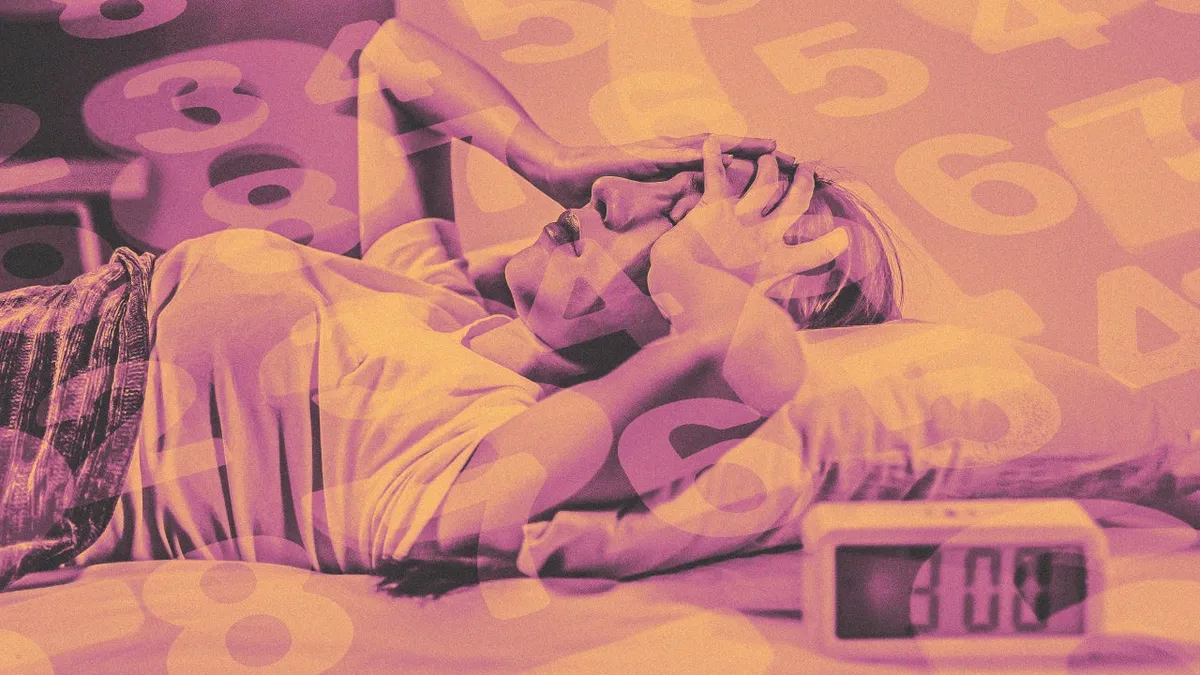
Congratulations, you played yourself. You're lying awake at 2am doing mental math about your grocery bill, which means you'll be exhausted tomorrow, which means your work will suffer, which means your financial situation might actually get worse. Welcome to the financial stress sleep spiral - the villain origin story nobody asked for.
According to a 2025 survey of 2,000 adults conducted by the American Academy of Sleep Medicine (reported by Fast Company), a staggering 78% of American adults are losing sleep because of financial stress. That's not a niche problem. That's nearly four out of five people staring at the ceiling thinking about credit card debt, gas prices, layoff rumors, and the audacity of egg prices.
Why this is a bigger deal than you think
Here's where it gets properly nasty. Financial stress causes bad sleep. Bad sleep tanks your cognitive performance, your mood, your immune system, and basically every major physiological system in your body. And a foggy, cranky, underperforming version of you is - surprise - less equipped to actually solve the money problems keeping you up in the first place.
It's a doom loop with impeccable timing and zero chill.
Sleep deprivation doesn't just make you feel rubbish. It chips away at the exact skills you need when money gets tight: decision-making, focus, emotional regulation, and the kind of creative problem-solving that turns a bad financial situation into a manageable one. Tired people make worse choices. Worse choices often cost money. You see where this is going.
So what actually helps?
The good news - yes, there is some - is that the spiral can be interrupted. A few approaches worth considering:
- Schedule your money worrying. Sounds weird, works surprisingly well. Give yourself a 20-minute "finance window" earlier in the day so your brain isn't saving it all for bedtime.
- Protect your sleep environment like it owes you money. Cool, dark, screen-free. Your nervous system needs the memo that the day is actually over.
- Stop doomscrolling economic news at 11pm. Inflation will still be there in the morning. The news app can wait.
- Talk to someone. Financial anxiety is partly a cognitive distortion problem - a therapist or even a trusted friend can help reality-check the catastrophising.
The bigger picture
A tough economy, rising costs, and job market jitters are genuinely stressful - that part isn't in your head. But letting financial anxiety eat your sleep is a tax you're paying on top of all the other ones, and it's one you might actually be able to reduce. Fixing your sleep won't fix the economy. But it might make you just sharp enough to fix your corner of it.
And honestly, at this point, we'll take what we can get.